
From the Sales Floor to the CEO’s Office: Selcuk Karabasoglu’s Two-Decade Rise at A.J. Worldwide
- Written by Admin TOA
- Published in Businessman
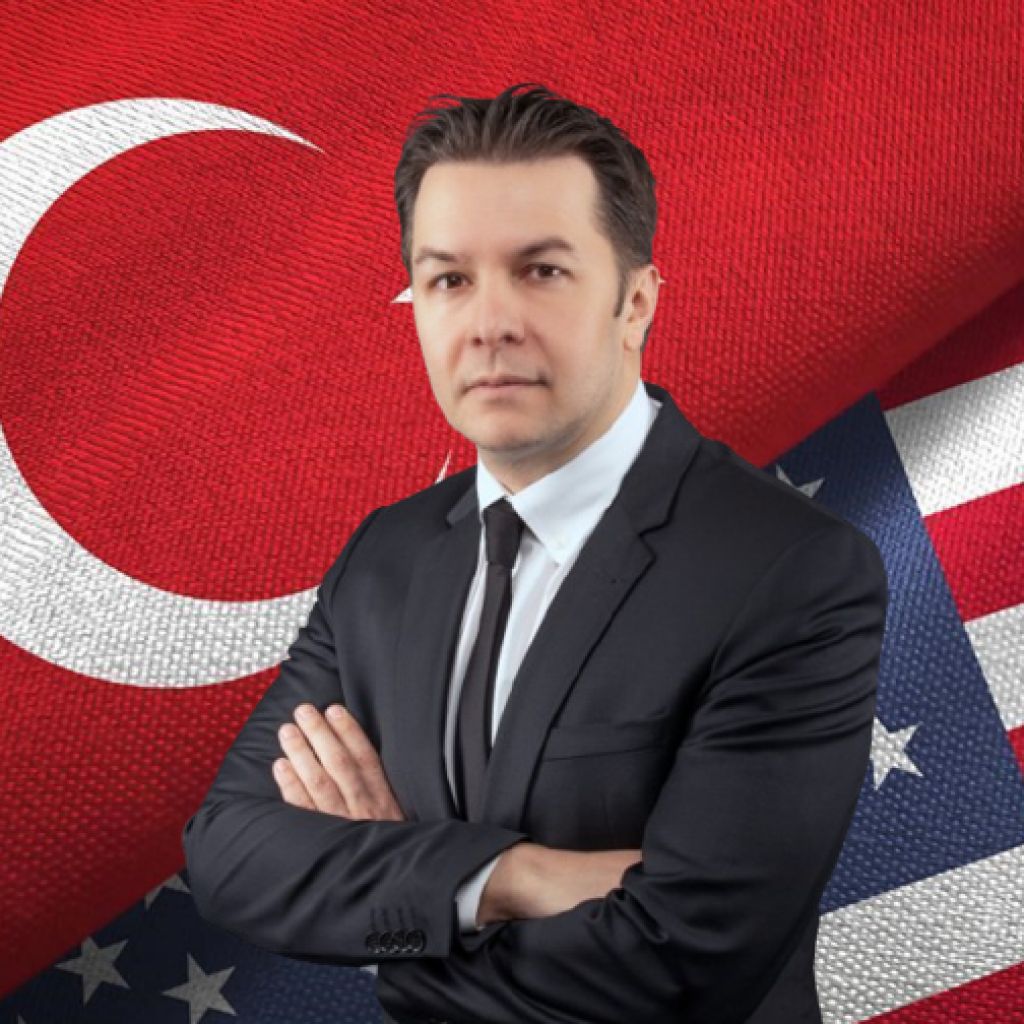
In global logistics, success is often a form of invisible engineering. A container reaching the right port, an air shipment arriving on time, a customs file moving forward with the correct documentation—viewed from the outside, these can seem like routine operational details. But inside the industry, what keeps the system running is not infrastructure alone. It is trust, speed, discipline and the ability to make sound decisions under pressure. Selcuk Karabasoglu’s story begins precisely at that intersection: a professional who joined a small logistics company in a sales role in 2005 and, over the years, rose to become its CEO. Today, A.J. Worldwide is a well-established company that has been operating since 1994 in global freight forwarding and third-party logistics. The company provides air freight, ocean freight, trucking, warehousing, customs brokerage and third-party logistics services, while also operating in niche segments such as e-commerce fulfillment, exhibition freight, express freight, humanitarian aid logistics and project cargo. What makes this story compelling, however, is not simply the scale of the company. More important is the fact that Karabaşoglu’s rise was not the product of a carefully mapped corporate succession plan. It was the result of consistent effort, the ability to build trust and a habit of doing more than what was written in the job description.
BORN IN SWITZERLAND
Karabaşoglu’s personal journey bears the marks of a classic immigrant success story. He was born in Switzerland. When he was 10 years old, his family moved back permanently to Turkey. He spent the first part of his childhood in Europe and the rest in Turkey. Although his family had ties to foreign trade and textiles, he did not begin with a clearly defined plan to build a corporate career in logistics. Nor did he come to the United States with the specific goal of climbing the ranks of a logistics company. He came for graduate school. But some careers are not designed in advance; they take shape while you are working. His was one of them.
What first appeared as a part-time opportunity during his university years gradually became the central axis of his professional life. When he joined A.J. Worldwide, the company had approximately 10 employees. It was not a large corporate structure with layers of management or a vast operational network competing head-to-head with the giants of the market. There was a desk, a computer and a simple challenge: let’s see what you can do.
One of the most striking aspects of his career is that he never defined himself through titles. He says he was not working for promotions, did not ask for status and never demanded salary increases. In his view, the real priority was doing the job properly, standing behind one’s word and helping build a culture of honest business. That approach may sound almost old-fashioned in a corporate world increasingly driven by optics and positioning. But in a low-margin, high-stakes industry like logistics, reliability can become more valuable than technical expertise alone.
That is why his rise cannot be explained solely by individual performance. It was also the product of a long-term trust partnership between ownership, senior management and professional leadership. The company’s owner and management team saw in Karabaşoglu not just a sales professional, but someone who could grow with the company and help shape its future. To understand how that trust was built, one only needs to look at how he approached the work. A consistent theme runs through his interview: if a job is worth doing, it should be done properly; the process should be modernized; the work should be owned; and responsibility should never be outsourced.
Karabaşoglu’s account also makes clear that A.J. Worldwide’s growth was not accidental. It was measured, disciplined and organic. By his own description, this was not a company inflated by external financing, but one that reinvested what it earned back into the business. Instead of accumulating real estate and tying up capital in owned warehouse assets, the company chose to keep its resources inside trade and operations. In a sector where margins are tight, cash flow is critical and scale demands continuous reinvestment, that is a meaningful strategic choice. The company’s success, in this sense, is defined not simply by becoming larger, but by becoming more flexible and more efficient.
TURKISH PROFESSIONALS AT AJ
Over the years, Karabaşoglu has also become someone who helped open the door for many Turkish professionals entering the sector. Today, the company’s Turkey-linked operations represent an important part of its broader structure. The Bursa-based team is one of the clearest examples. Rather than functioning as a conventional call center, this operation supports U.S. activities through a back-office and operational support model. According to Karabasoglu, the goal is straightforward: preserve quality while lowering costs and increasing competitiveness. Bursa was chosen not only because of cost considerations, but also because of access to talent, links to local universities and the desire to avoid disrupting partner relationships in Istanbul.
Underlying this model is a very clear reading of global competition. Logistics is no longer just about transportation. It is about data, speed, talent and process design. In a world where the annual cost of one employee in the United States can equal the cost of building a small team elsewhere, service exports and back-office structures have become part of the industry’s new normal. When Karabaşoglu talks about India, Turkey and even back-office hubs in Eastern Europe, he is describing something larger than his own company: how businesses survive in an intensely competitive global economy. Costs must be managed without sacrificing quality. If quality slips, sustainable growth disappears with it.
And yet the leadership profile he presents is not merely that of an executive focused on cost control. He comes across more as an operator who understands the soul of the business. He places particular importance on specialization. Rather than trying to do everything, he emphasizes building real strength in selected niche areas. Food logistics, automotive suppliers, machinery and certain categories requiring special licensing stand out among them. That philosophy reflects a mature management instinct: growth does not come from chasing every opportunity, but from going deeper where the company has real expertise.
TRUST THEN TITLE
So what, exactly, defines the leadership side of this story? Perhaps the most important answer is this: Karabaşoglu never saw himself as someone whose ambition was simply to become CEO. He saw himself as someone trying to do his job well. That distinction matters. In today’s professional world, visibility often moves faster than substance. Titles are frequently discussed before contributions. Karabaşoglu’s story unfolds in the opposite direction. First came contribution, then authority. First came trust, then title.
That makes his journey especially meaningful for immigrant professionals. In the United States, career advancement is often framed around strong English skills, prestigious schools or the right network. But the example of A.J. Worldwide suggests that long-term advancement may depend on something both simpler and harder: consistency, loyalty, problem-solving ability and the willingness to put the company’s future ahead of personal ego.
That is why Selcuk Karabasoglu’s story is not merely a promotion story. It is the story of an executive who started inside a small team and eventually came to lead an organization approaching 400 employees worldwide. It is also one of those increasingly rare examples in business that still suggests character, effort and credibility can be rewarded over time.
And perhaps most importantly, it offers a strong answer to a fundamental question: how far can one person rise in a career? Sometimes, the answer is found in the very first company they join—provided they see it not simply as a place to work, but as something they help build.
