
Admin TOA

Admin TOA

The Historic Synagogues of Turkey

Image
Photo by Izzet Keribar.

The Historic Synagogues of Turkey, a 201-page book, published by The American Sephardi Federation, includes the pictures of 34 synagogues in Turkey. The other album book “Synagogues of Turkey” in which the photographs belong to the famous artist İzzet Keribar, the texts are written by researcher Naim A. Güleryüz, and the concept was carried out by Joelle İmamoğlu is published by Gözlem Publishing.

Turkish-Sephardic Music

Image
Los Pasharos Sefaradis has four members: Karen Gerson Sarhon (voice), I. Izzet Bana (voice), S. Selim Hubes (ud, guitar), Y. Yavuz Hubes (kanun, ud, percussion).

By Karen Gerson Şarhon

Turkish Sephardic Music is an adventure that starts in the year 1492.  A great number of the Jews (according to some historians, this number was around 200,000) who were expelled from Spain by the Spanish Inquisition arrived in the Ottoman Empire and were welcomed by Sultan Bayazid II.  These Jews, who settled down all over the Ottoman Empire, called themselves “Sephardic Jews”, from the Hebrew name for Spain, “Sepharad”.  The traditions and culture of the Sephardic Jews have come down to us through the years, following a characteristic path of their own, which slowly turned into “Turkish-Sephardic”.

Sephardic Cuisine

Image
By Viki Koronya
- -
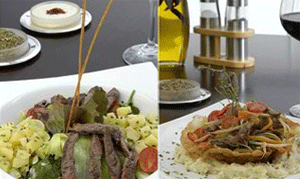
Sephardic Jew brought along with them from Spain not only their customs and practices but also their cuisine.  Going through a number of  changes over the generations, these traditions are left to us as an inheratence.  The changing conditions of life have caused them to begin to disappear.  In our time, less time is spent in the kitchen.  For example, instead of first boiling a certain food and, then, broiling or baking it in the oven, simpler dishes, such as a salad and grilled meat, are preferred.  

Ottoman Synagogue Money and Jewish Printing in the Ottoman Empire

Image
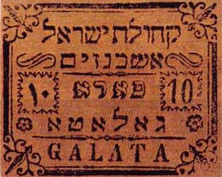
The Money of Ottoman Synagogue, 19th century, Ashkenaz Synagogue (Tunc Buyurgan, Aykiri Paralar)

The use of paper money (Kaime) during the reign of Ottoman Sultan Abdulaziz (1867-1876) was unsuccessful.  In the following years, on the eve of the Ottoman-Russian war, the provision of funding requirements made it necessary for Sultan Murat V to attempt to establish its use again. The Sultan announced the Kaime Regulation to restart printing kaime on August 6th, 1877. However, the new Kaimes were not exchanged for gold and silver.  The value of the paper currency began to fall and the public lost confidence in using Kaimes.
Subscribe to this RSS feed