



In Turkey, Entrepreneurs and VCs Are Still Waiting for Their Big Payday
 Elmira Bayrasli/ (VentureBeat) – Tantalizing investors and innovators at the crossroads between Europe and the Middle East, Turkey has emerged as an entrepreneurial hub. The past five years prove this, with companies churning out billions of dollars worth of e-commerce, gaming, mobile, and software platforms and products.
Deloitte, an auditing, consulting and financial advisory firm, valued Turkish merger and acquisition deals in the e-commerce space at $29 billion in 2010. When VentureBeat reported on the Turkish e-commerce scene last year, we reported that the market accounted for $16.3 billion in revenue for all of 2010. Since then it’s grown even further: Turkish e-commerce market was $19.7 billion for 2011, and through September, it accounts for $17.7 billion this year.
Yet the breakthrough many in Turkey’s entrepreneurship space are waiting for seems distant. Many in the private sector, particularly investors, worry that even though there are many bright and promising Turkish entrepreneurs, there aren’t enough venture capitalists to back them. Indeed, venture capital in Turkey sits on a razor’s edge, with only a handful of funds available for thousands of startups. The next few years will determine whether that edge cuts lucrative returns to solidify Turkey’s place as an innovation hub or whether it bleeds dry, rendering the county an eternal emerging market.
Impatient capital
Last year venture capital godfather Kleiner Perkins, along with Tiger Global, injected a surge of optimism into the Turkish startup scene when it invested a combined 26 million into Trendyol, a Turkish version of Gilt Groupe, an online flash sales site. Other investments by Amazon, eBay, and Intel Capital into several e-commerce sites — online flower and chocolate marketer Ciceksepeti, online auction clone GittiGidiyor, and daily deals namesake Gruponya — has fueled the sentiment that Turkish venture capital has arrived. But as with any venture capital investment that must wait out the possibility of successful exits, only time will tell. Time is exactly what has many worried.
The Turkish economy, which has grown at an average between 5 percent to 7 percent over the past five years, is slowing down. The International Monetary Fund expects the country to grow by 2.3 percent in 2012, a dramatic drop from the 8.5 percent it grew last year. Turks want returns today, which is why e-commerce clones dominate much of the country’s startup scene. Online copycats have a low barrier to entry, have already demonstrated proof of concept, and can be easily “flipped.” Therein lies the danger, as Cem Sertoglu, an Istanbul-based venture capital partner with Early Bird Ventures, points out.
“E-commerce is cheap to start but expensive to keep up because once it gets going it requires a lot of backend operations and logistics. Building a website is easy. Getting the product out is costly,” Sertoglu says. He notes that it takes an average of $25 million to bring an e-commerce company to full scale. That is why, he notes, it is sometimes the “big established retailers” such as Macy’s and Nordstrom that dominate the online market, not the “upstart” flash-sales sites or pure play ventures.
Despite having “a strong payments system,” a sophisticated banking structure, and a credit card penetration rate of 62 percent, Sertoglu is skeptical that many of Turkey’s e-commerce platforms will succeed against eventual entrants who hold strong supply-chain positions. However, noting that “the number of people who have ever completed a commercial transaction online in Turkey is around 5 million, a mere 10 percent of Internet users,” he remains, “overall bullish” on Turkish entrepreneurship and, thereby, Turkish venture capital, noting that even if some e-commerce companies fail, the Turkish tech scene is strong and promising, especially with a highly educated talent pool and reverse brain drain coming back to the country.
Jose Romano, an investor with the European Investment Fund (EIF) and the head of the Istanbul Venture Capital Initiative (IVCI), agrees. He says that e-commerce is not where “the true potential of Turkey lies.” He is more interested in “catalyzing” what he calls the “third generation” of business models that take advantage of technology transfers from universities and that have been “built locally and can expand in the region and globally.”
Uncharted territory
Turkish e-commerce showed its first visible signs of distress in August when the German-based tech “clone factory” that reproduces successful Internet sites in many countries, Rocket Internet, shut down its 400-person operation in Istanbul.
Turkey has seen less obvious indications as well. Skype cofounder Niklas Zennstrom last year made Istanbul the European headquarters for his venture arm, Atomoco. It has not made a single investment in a Turkish enterprise, choosing to act as a base for its existing portfolio companies such as Fab, Rovio, and Wrapp that are interested in launching in Turkey.
While other marquee VCs have shown interest in rolling out a presence in Istanbul, including Accel Partners and Intel Capital, they have not made a lot of active investments here. Back in 2010, a former Silicon Valley hand and major player in Turkish angel investing told me he thought all of this was “tire-kicking.”
“Quite a bit are interested in the (Turkish) Internet business but most of them are afraid of making investments,” this investor told me.
So too are banks who have hesitated to extend capital to small and medium businesses Larger, more established family conglomerates have avoided taking on equity, refusing to yield their corporate governance to outsiders. The result has been stunted Turkish capital markets and deal flow.
Turkish investors and entrepreneurs have no sense of how venture capital investments end. We’ve seen a few exits from angel investments in Turkey, but few of any serious significance.
“We’re seeing the first chunks of wealth made from the Internet,” says Earlybird’s Sertoglu, who himself saw returns from angel investments he made in Yemeksepeti.com. “But no one has made it really rich.”
Despite having a capital markets board that oversees the Istanbul stock market, investment banking and private equity, the lack of laws regulating venture capital and outlining tax incentives for investors in Turkey only fuels investors’ fear.
Nonetheless, venture capital has managed to lay down roots in Anatolia.
Sowing VC seeds
The Turkish government has, for the past decade, extended credits to small business owners and awarded research and development grants for technology projects with the support of the World Bank.
The global financial body helped to establish the independent Turkish Technology Development Foundation (TTGV) in 1991. Though headquartered in the Turkish capital, Ankara, TTGV’s mission has been to support “technological innovation activities in Turkey.” It has provided $300 million to 950, largely R&D projects, carried out by 800 companies. It also contributed to the establishment of investment firms, Is Girisim and Turkven, both of which launched in 2000. Though largely focused on private equity for established companies in need of later stage growth capital, Is Girisim and Turkven have made combined investments over $3.5 billion, in predominately larger buyouts of brick-and-mortar companies. While both are on their third funding rounds, neither has yielded significant returns.
What they have done, however, is create a precedent for others to start funds. In 2000, Access Turkey Capital Group established a venture arm, iLabs. The Istanbul Venture Capital Initiative (IVCI), a EUR 160 million fund of funds launched in 2007.
IVCI director Jose Romano describes it as being a “catalyst to advance the development of the [Turkish VC] industry.” It has inspired a number of largely European and some Turkish investors to set up investment funds. IVCI has not given any money to any venture capital firm.
212 Capital Partners is the latest risk-taker to dive into the Turkish entrepreneurship. Launched this year with a first round fund raised among Turks totaling $30 million, it is eyeing early stage investments in tech startups in e-commerce, gaming, and software applications.
“What we’re trying to do is more entrepreneur-friendly,” says Ali Karabey, a general partner at 212. His idea of entrepreneur friendly is “providing equity where there is no debt” and transforming the Turkish entrepreneurial landscape that, as Karabey describes, is made up of either small firms that rarely scale or large conglomerates that dominate industry verticals. He and partner Numan Numan are trying to mitigate risk and jumpstart deal flow, which is woefully absent in Turkey.
“The risk appetite of investors [in Turkey],” says 212 backer Emre Kurttepeli, “is not one you’d find in Silicon Valley.” In Silicon Valley, he notes, “you have a certain amount of money that gets dispersed into anywhere between 50 to 100 investments and maybe five of them makes a return.” In Turkey, investors are all about collateral and hard numbers. Early stage and seed funding that rely on projected valuations is an uncomfortable concept for these financiers already frustrated with a valuation and due diligence process that depends on weak accounting and auditing practices. It is not uncommon for a Turkish company to keep up to three sets of books.
Projected valuations are tricky and have become a controversial topic in the Turkish startup scene. “The Turkish market has become a bit frothy,” Pamir Gelenbe, an investor with Belgian-based Hummingbird Ventures, recently said in an interview. “Frothy meaning the valuations are starting to creep to unreasonable levels.” He notes that he and his colleagues “find it more difficult to find attractive deals from a valuation stand point.” Another venture capitalist, who asked to stay anonymous, echoed the same point, noting that Turkish entrepreneurs are overvaluing their companies.
Jose Romano chalks this up to the “hype” in the Turkish market. “There have been successful experiences of very strong individuals raising large funds, so many people think this is normal. Just because the economy is doing well and Turkey is in the emerging-country pot, they try to do the same,” he says. Romano is split on the advantages and disadvantages of this. He says it is a disadvantage “because these things take time and many people will be disappointed with the high expectations that have been raised with no results in the short-term.”
“It is an advantage because it brings forward the concept of entrepreneurship, more discussion, more talent, more people coming in from abroad to share experiences, and more money looking for deals,” Romano says.
Going big
Everyone agrees that there is plenty of money in Turkey. The challenge is to couple it with risk. Romano says that one thing that the Turkish VC landscape needs is “strong local limited partners.”
212’s Ali Karabey agrees. “The future of venture capital is on us,” he says and then pausing for a moment. “Big things will develop here. They will be so, so big that we’ll forget about all the problems that we had before starting.”
Read more at http://venturebeat.com/2012/11/20/in-turkey-entrepreneurs-and-vcs-are-still-waiting-for-their-big-payday/#VzJDxbidckr1xWvH.99
 SPARKS, Nev., – Sierra Nevada Corporation (SNC) has provided the U.S. Army 3rd Infantry Division with a refurbished Mobile Tower System (MOTS) allowing for the rapid deployment and establishment of Air Traffic Control (ATC) operations for an upcoming overseas deployment. This set of MOTS is pre-production equipment and is engineered and manufactured to support an earlier award from the U.S. Army Aviation Systems Command.
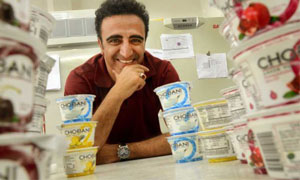 Greek yogurt giant Chobani is on the hunt for a new marketing VP after parting ways with Doron Stern, who joined the company nearly four years ago. "Doron has moved on to pursue other opportunities," Nicki Briggs, Chobani's VP of corporate communications, told Ad Age in an email. "We wish him well as he has been instrumental in building our business and creating world-class ad work for the Chobani brand."
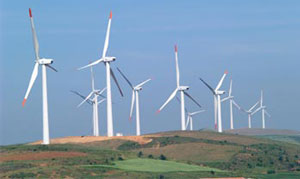 Anatolia Energy (ASX: AEK) has acquired 26.1% of its joint venture partner Vetter Uranium, giving it an effective 52% interest in an advanced uranium project in Central Anatolia, Turkey. Aldridge Minerals (CVE: AGM) will be paid C$250,000 for its stake in Vetter. It has also agreed to sell its remaining equity stake of 6.4% in Anatolia consisting of 10 million shares priced at A$0.05 each. Canadian investment company, Sprott Asset Management has purchased 9 million shares while the remaining shares have been acquired by Anatolia’s managing director Jim Graham.
 ANN ARBOR, Mich. (AP) — Want to see how quickly the look and business model of American public universities are changing? Visit a place like Indiana University. Five years ago, there were 87 undergraduates from China on its idyllic, All-American campus in Bloomington. This year: 2,224. New figures out Monday show international enrollment at U.S. colleges and universities grew nearly 6 percent last year, driven by a 23-percent increase from China, even as total enrollment was leveling out. But perhaps more revealing is where much of the growth is concentrated: big, public land-grant colleges, notably in the Midwest.
 One of the many challenges facing the Turkish economy is to increase the value added of its products by relying less on simple assembly or use of machines and technology developed abroad. The experience of AirTies, a high tech company specialising in internet connectivity, demonstrates how a company utilising local engineering talent and a boost from external financing can help drive Turkey into a higher level of economic activity.
  Former NBA big man Mehmet Okur announced his retirement from basketball on Wednesday at the age of 33. Mehmet Okur, a 10-year NBA veteran, announced his retirement Thursday. The 6-foot-11 Okur, who is from Turkey, averaged 13.5 points and 7 rebounds in 10 NBA seasons. He won an NBA title with the Detroit Pistons in 2004. He played in 17 games for the New Jersey Nets last season and was traded to the Portland Trail Blazers in the deal that brought Gerald Wallace to the now Brooklyn Nets. Portland waived him in March. Okur said he was retiring because injuries have kept him from contributing at a high level.
  Comodo, a Turkish company owned by Melih Abdulhayoglu, is providing the security of the websites of nominees of the U.S. presidential elections. Results of the elections, which will choose either President Barack Obama or Republican Mitt Romney, will be revealed on November 6.
 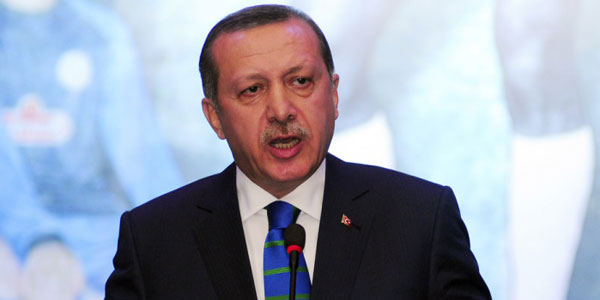 Turkish Prime Minister Recep Tayyip Erdogan said on Wednesday that he would like to congratulate US President Barack Obama on his election victory. Erdogan, who is visiting Bali to attend the 5th Bali Democracy Forum, replied to questions of Turkish reporters.
 Utah Jazz fan favorite Enes Kanter gave an entertaining interview to Kyle Gunther of 1320 KFAN in Salt Lake City on Wednesday. Kanter touched on many funny topics such as his absurd diet, his bucket list, and his rookie hazing experience. The 2011 No. 3 overall draft pick also told Gunther that his home in Utah is haunted. Kanter says he rented a big house in Salt Lake City and that he’s experienced many strange incidents there recently.
 By Melih Abdulhayoglu - November 6th is upon us, which in the United States means it is Election Day. And it isn’t just any Election Day but for the position of President of the United States. For months on end the 2012 Presidential Campaign has had few topics in which the two candidates actually agree on. In what has been one of the most heated campaigns in recent memory, between incumbent President Barack Obama and Republican candidate, Massachusetts Governor Mitt Romney, these two have essentially argued over everything from pulling the troops out of Afghanistan, Healthcare, and the budgets with what seems to be no intentions of any bipartisan compromise.
 “We just made history,” tweeted the campaign managers of Barack Obama four years ago, a reference, among other things, to the effective use of social media throughout the Obama campaign. If John F. Kennedy was the first American president to have used the new medium, television, to his advantage, Obama was the first one to use social media, successfully managing a flourishing grassroots campaign. Regardless of who becomes the next occupant of the White House, the U.S. presidential elections tomorrow will not be the elections that made history. It was the 2008 elections. “If not for the Internet, Barack Obama would not be president or even the democratic nominee,” Arianna Huffington of the Huffington Post website boldly said following Obama’s win in 2008.